
CRE Loans for Buying Retail Space: What Buyers Must Know

Buying a retail property is a major investment, and choosing the right financing can make or break the deal. Commercial real estate (CRE) loans for buying retail space are one of the most common options for business owners and investors looking to purchase storefronts, shopping centers, or standalone retail buildings.
These loans are designed specifically for commercial properties, offering longer terms, competitive rates, and flexible structures compared to residential financing. The thing is, commercial real estate loans work differently from the mortgage you might have on your home.
They’ve got their own rules, requirements, and quirks that can catch you off guard if you’re not prepared. That’s exactly what we’re diving into today, breaking down everything from loan types to interest rates, so you can approach lenders with confidence and secure the best possible terms for your retail space purchase.
Understanding Commercial Real Estate Loans for Retail Properties

Commercial real estate loans are fundamentally different beasts from residential mortgages. While both involve borrowing money to purchase property, that’s pretty much where the similarities end. CRE loans are designed specifically for income-producing properties, and lenders evaluate them through an entirely different lens.
Key Differences Between CRE Loans and Residential Mortgages
The biggest difference you’ll notice right away? The down payment. While you might snag a home with 3-5% down through various programs, commercial lenders typically want to see 20-30% on the table. And that’s just the beginning.
CRE loans also come with shorter terms, usually 5 to 20 years, compared to the standard 30-year residential mortgage. But here’s where it gets interesting: many have longer amortization periods than their actual term length. You might get a 10-year loan amortized over 25 years, meaning you’ll face a balloon payment at the end unless you refinance.
Lenders also look at your property’s ability to generate income, not just your personal finances. They’ll calculate something called the Debt Service Coverage Ratio (DSCR), which basically measures whether the property’s income can cover the loan payments. Most lenders want to see a DSCR of at least 1.25, meaning the property generates 25% more income than needed for loan payments.
Common Types of Retail Spaces Eligible for CRE Financing
Not all retail spaces are created equal in the eyes of CRE lenders. Strip malls and shopping centers are often favorites because they spread risk across multiple tenants. If one store closes, you’ve still got income from the others.
Standalone retail buildings can work too, especially if they’re in prime locations with strong foot traffic. Think of corner stores in busy neighborhoods or boutique shops in thriving downtown districts. Mixed-use properties, those combining retail on the ground floor with apartments or offices above, are particularly attractive to lenders right now because they offer multiple income streams.
Even specialty retail spaces like car dealerships, gas stations, or restaurant buildings can qualify, though they might come with additional requirements. The key is demonstrating that your chosen property has strong income potential and isn’t overly dependent on a single tenant or highly specialized use that would make it hard to re-lease if needed.
Types of CRE Loans Available for Retail Space Purchase
Your financing options for buying retail space are more varied than you might think. Each loan type has its sweet spot, and choosing the right one can save you thousands, or even hundreds of thousands, over the life of your loan.
Traditional Bank Loans
Traditional bank loans remain the go-to choice for many retail space buyers, and for good reason. Banks typically offer competitive rates, especially if you’ve got an existing relationship with them. Local and regional banks often have the best understanding of your market, which can work in your favor when they’re evaluating your property’s potential.
These loans usually require a stellar credit score (think 700+), substantial down payment, and a proven business track record. But if you check those boxes, you’ll likely get favorable terms. Banks also tend to be more flexible with loan structuring, potentially offering interest-only periods during renovation or build-out phases.
SBA 504 and 7(a) Loan Programs
Now we’re talking about some seriously attractive options for small business owners. The SBA 504 program is specifically designed for real estate purchases and can cover up to 90% of your purchase price. Yes, you read that right, you might only need 10% down.
The structure’s a bit unique: a bank covers 50%, the SBA covers 40%, and you put down 10%. The SBA portion comes with a fixed rate, which provides nice stability for your long-term planning. The catch? You’ll need to occupy at least 51% of the space for your own business.
The SBA 7(a) program offers more flexibility; you can use it for working capital alongside your property purchase. While the down payment requirement is typically higher (around 15%), it’s still better than conventional loans, and the terms can stretch up to 25 years for real estate.
Bridge Loans and Hard Money Lending
Sometimes you need to move fast, and that’s where bridge loans shine. Maybe you’ve found the perfect retail space, but need to sell your current property first. Or perhaps you’re competing with cash buyers and need to close quickly.
Bridge loans can get you funds in days rather than weeks, though you’ll pay for that speed with higher interest rates, think 8-15% compared to 5-7% for traditional loans. They’re meant to be temporary, usually 6-24 months, giving you time to arrange permanent financing or sell other assets.
Hard money lenders focus almost entirely on the property’s value rather than your creditworthiness. If you’re buying a distressed property in a prime location with huge upside potential, it might be your ticket in. Just be prepared for rates that can hit 18% and terms measured in months, not years.
These work best when you have a clear exit strategy, like flipping the property after renovations or refinancing once you’ve improved the building’s income.
Essential Requirements and Qualification Criteria
Getting approved for a CRE loan isn’t just about having a good business idea and a winning smile. Lenders want concrete proof that you’re a safe bet, and they’ll dig deep into your finances to find it.
Credit Score and Financial History Requirements
Your personal credit score still matters big time, even though it’s a business loan. Most lenders want to see at least 680, but if you’re shooting for the best rates and terms, aim for 750 or higher. They’ll pull reports from all three bureaus and likely use your middle score.
But it goes beyond just the number. Lenders scrutinize your credit history for patterns. Multiple recent inquiries? Red flag. History of late payments on previous business loans? Major concern. Bankruptcy in the last seven years? You’ll need a compelling explanation and probably a co-signer.
Your business credit matters too, especially if your company has been around for a while. Lenders check your Dun & Bradstreet score, payment history with vendors, and any existing business loans. They want to see that you manage business debt as responsibly as personal debt.
Down Payment and Loan-to-Value Ratios
The days of zero-down commercial loans are long gone. Most lenders want to see serious skin in the game, typically 20-30% down for a retail space purchase. Some might go as low as 15% if you’ve got exceptional credit and a rock-solid business plan, but don’t count on it.
Loan-to-value (LTV) ratios usually max out at 75-80% for retail properties. But here’s something many buyers don’t realize: lenders calculate this based on the lower of the purchase price or appraised value. If you negotiated a great deal on a $500,000 property that appraises for $450,000, your loan amount will be based on that $450,000 figure.
Having extra cash reserves beyond your down payment strengthens your application significantly. Lenders like seeing 6-12 months of loan payments sitting in your account as a safety net.
Business Plan and Cash Flow Projections
Your business plan isn’t just some formality; it’s your chance to sell lenders on your vision. They want to see detailed financial projections for at least three years, including realistic revenue estimates, operating expenses, and how you’ll handle the debt service.
If you’re buying space for an existing business, you’ll need three years of tax returns and financial statements showing consistent profitability. New businesses face a tougher road, but can still qualify with strong personal finances and realistic projections backed by market research.
Don’t just show them numbers, tell them your story. How will owning versus renting improve your business? What’s your competitive advantage? How will the location drive revenue? Lenders fund businesses they believe in, not just properties they can foreclose on.
CRE Loan Terms and Interest Rate Structures
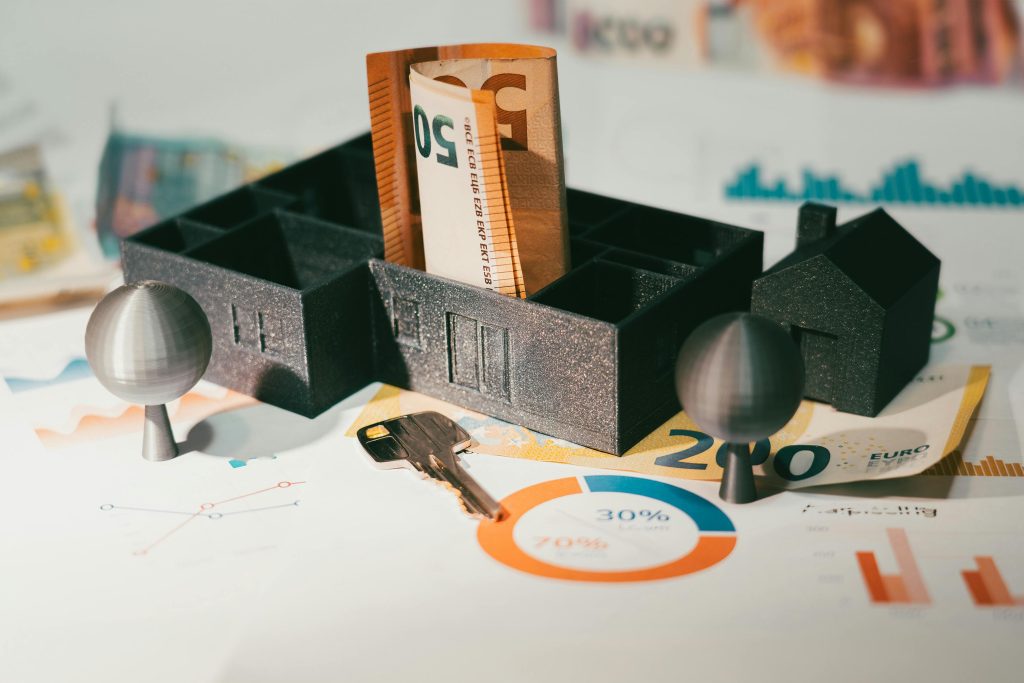
The terms and rate structure of your CRE loan will impact your business for years, maybe decades. Understanding your options helps you choose what aligns with your business strategy and risk tolerance.
Fixed vs. Variable Rate Options
Fixed rates give you predictability; your payment stays the same whether interest rates skyrocket or plummet. This stability makes budgeting easier and protects you from rate increases. Right now, with rates having climbed significantly from their historic lows, locking in might feel smart if you believe we’re near a peak.
Variable rates typically start lower than fixed rates, which can mean significant savings initially. They’re usually tied to a benchmark like the prime rate or SOFR (Secured Overnight Financing Rate) plus a margin. If you’re confident that rates will drop in the coming years, or if you plan to sell or refinance relatively soon, a variable might save you money.
Some lenders offer hybrid options, fixed for the first 3-5 years, then converting to variable. This gives you initial stability while potentially benefiting from future rate decreases.
Amortization Schedules and Balloon Payments
Here’s where commercial loans get tricky. Your loan term (when it’s due) and your amortization schedule (how payments are calculated) are often different animals. You might have a 7-year term with a 25-year amortization schedule.
What does this mean for you? Lower monthly payments during the loan term, but a massive balloon payment at the end, essentially the entire remaining balance. Most borrowers plan to refinance before that balloon comes due, but that assumes you’ll qualify for refinancing and that rates will be favorable.
Some loans offer partial amortization with smaller balloon payments, while others might be interest-only for a period. Interest-only sounds attractive, with lower payments. But you’re not building any equity during that time. It works great if you’re renovating and need cash flow flexibility initially, but make sure you’re prepared for the higher payments when principal kicks in.
The Application Process for Retail Space CRE Loans
The application process for a CRE loan makes getting a home mortgage look like filling out a library card application. But being organized and prepared can shave weeks off your timeline and improve your chances of approval.
Required Documentation and Financial Statements
- Clear digital folders with labels by category and date, since organised files can speed up underwriting and reduce lender follow-ups.
- Three years of business tax returns, plus personal tax returns for any owner with 20% or more ownership.
- Year-to-date profit and loss statement and a current balance sheet to show recent performance.
- Business bank statements for the last three to six months, with lenders reviewing large deposits and unusual transactions.
- Property documents such as the purchase agreement, rent roll if there are existing tenants, current leases, operating expense statements, and property tax bills.
- Improvement plans, if you are renovating, including contractor bids and architectural plans when available.
- Legal and business paperwork like formation documents, operating agreement, business licenses, and existing loan documents, if refinancing.
Property Appraisal and Environmental Assessments
The appraisal for a commercial property goes way beyond what you’d see with residential. Commercial appraisers look at three approaches: the cost approach (what would it cost to rebuild?), the sales comparison approach (what have similar properties sold for?), and crucially, the income approach (what’s the property’s income potential?).
Expect to pay $3,000-10,000 for a commercial appraisal, and it might take 2-4 weeks to complete. The appraiser will want to see inside every unit, review all leases, and analyze the local market thoroughly.
Environmental assessments are another beast entirely. Most lenders require at least a Phase I Environmental Site Assessment (ESA) to check for potential contamination issues. This involves reviewing historical property use, checking databases for nearby contamination, and conducting a site visit.
If that raises concerns, you might need a Phase II assessment with actual soil and water testing. Former gas stations, dry cleaners, or industrial sites almost always trigger additional scrutiny. Budget $2,000-5,000 for Phase I and potentially $10,000+ if Phase II is needed.
Costs and Fees Associated with CRE Loans
Brace yourself, the costs associated with CRE loans can make your eyes water if you’re not prepared. Beyond your down payment, you’re looking at a stack of fees that can add up to 5-10% of your loan amount.
Origination fees typically run 1-2% of the loan amount, and that’s just the beginning. Application fees might hit $5,000 before they even look at your paperwork seriously. Then there’s the appraisal we mentioned, environmental assessments, title insurance, survey costs, and legal fees for reviewing all those documents.
Lenders often charge processing fees, underwriting fees, and document preparation fees; it feels like they’re charging you a fee for charging you fees. And don’t forget about repayment penalties, which are standard on many CRE loans. These can be substantial, sometimes 5% of the remaining balance in year one, declining over time.
Some costs are negotiable, though. If you’re bringing a strong deal to the table, you might get the lender to waive application fees or reduce origination points. Shopping multiple lenders creates competition, and sometimes they’ll match or beat another’s offer. And if you’re considering Apply for Financing, we can help you navigate these costs and potentially connect you with lenders offering more competitive fee structures.
Recurring costs matter too. Property insurance for retail spaces costs more than residential, and you’ll need liability coverage on top of property coverage. Property taxes on commercial real estate often run higher than residential rates. Factor in maintenance reserves, lenders might require you to set aside funds monthly for future repairs and improvements.
The good news? Many of these costs are tax-deductible as business expenses. Your loan interest, property taxes, insurance, and even some closing costs can offset your taxable income. Work with a tax professional who understands commercial real estate to maximize these benefits.
Conclusion
Buying retail space with a CRE loan is definitely more complex than getting a residential mortgage, but it’s also one of the smartest moves you can make for your business’s future. You’re not just securing a location, you’re building equity, gaining control over your space, and potentially creating an additional income stream if you have excess space to lease out. The best results come from good prep and the right loan type. Lenders respond well to clean financials, a realistic plan, and clear numbers on how the property will pay for itself.
Your next step? Start pulling together those financial documents and get your credit in the best shape possible. Research properties in your target area and understand the local market dynamics. And when you’re ready to move forward, consider working with experienced professionals who can guide you through the process and help you avoid costly mistakes.
The retail space you buy today could become the cornerstone of your business empire tomorrow. With the right CRE loan and a solid strategy, you’re not just buying property, you’re investing in your business’s long-term success and financial independence.
Frequently Asked Questions
How does a Debt Service Coverage Ratio affect my CRE loan approval?
The DSCR measures whether your property’s income can cover loan payments. Lenders typically require a minimum DSCR of 1.25, meaning the property must generate 25% more income than needed for loan payments to qualify for financing.
What’s the difference between a loan term and an amortization schedule in commercial real estate loans?
CRE loans often have shorter terms (5-20 years) than their amortization periods (25-30 years). This means you’ll face a balloon payment for the remaining balance when the term ends, requiring refinancing or full payment at that time.
Can I use a CRE loan to buy retail space if I’m a startup with no business history?
Yes, new businesses can qualify for CRE loans with strong personal finances, excellent credit (typically 750+), and detailed financial projections backed by market research. SBA loans are particularly helpful for startups, though requirements are stricter than for established businesses.
How long does the CRE loan approval process typically take?
The commercial loan process usually takes 30-60 days from application to closing. This includes time for appraisals (2-4 weeks), environmental assessments, underwriting, and document review. Bridge loans can close faster, sometimes within days, but come with higher interest rates.
Are CRE loan closing costs tax-deductible for my business?
Yes, many CRE loan costs are tax-deductible business expenses, including loan interest, property taxes, insurance premiums, and certain closing costs. Working with a tax professional familiar with commercial real estate can help maximize these deductions and improve your overall investment return.
What to compare before financing commercial property
Compare property eligibility, owner occupancy where relevant, loan-to-value and coverage tests, recourse, reserves, valuation costs, rate structure, balloon risk, and prepayment terms.
Use the commercial real estate financing guides to compare the surrounding decisions, then review commercial real estate financing. For the closest related decision, read Commercial Real Estate Loans for LLCs: Requirements and Options.
Source to verify: For current U.S. market or program context, consult the OCC commercial real estate lending handbook. Product terms and eligibility vary by provider and can change.