
Virginia professor reveals hidden costs of government shutdowns
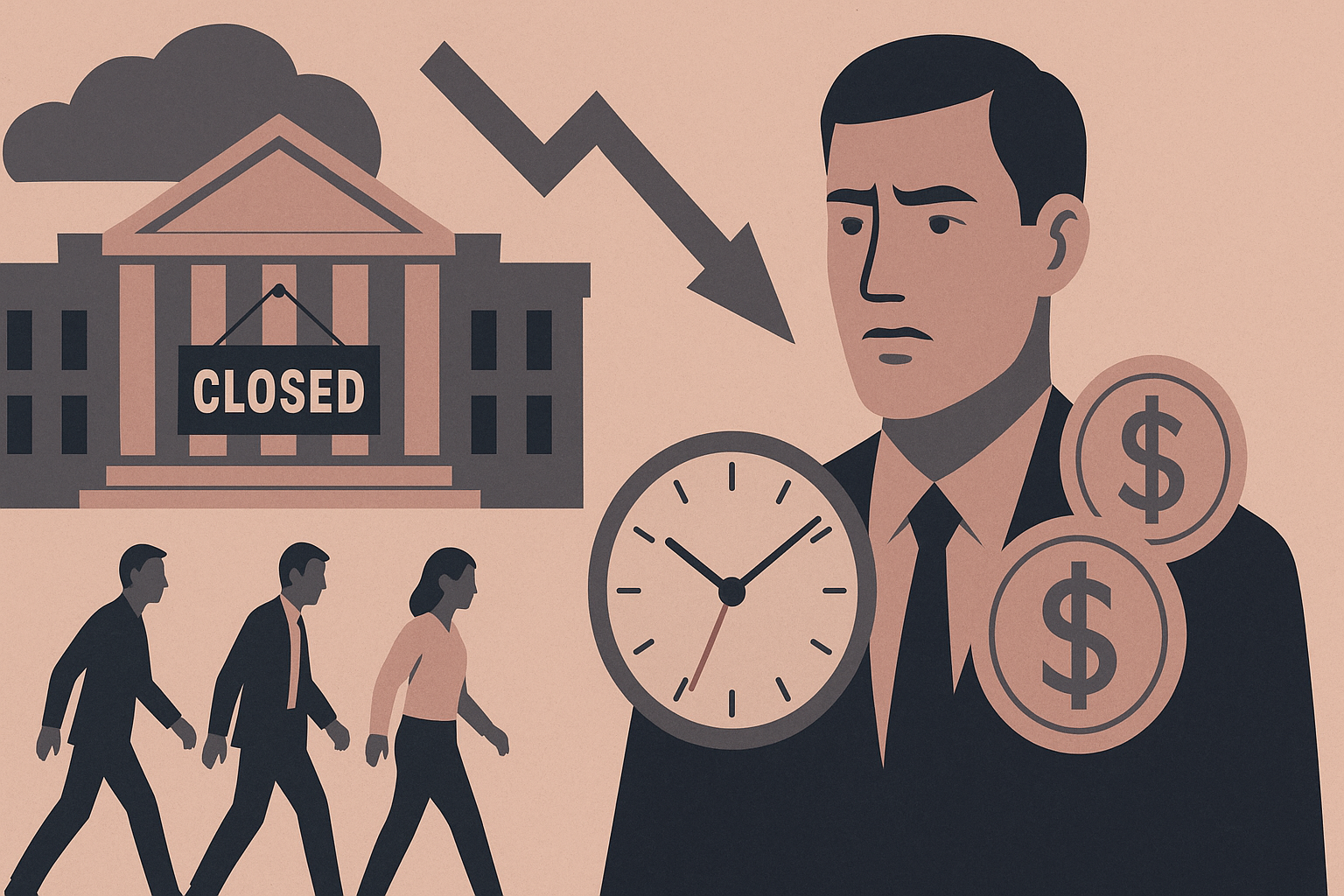
In the wake of government shutdowns, the immediate economic effects are quite visible, impacting everything from local businesses to tourism. However, the long-term consequences often remain obscured but can significantly affect both the government and taxpayers. Christoph Herpfer, an assistant professor at the University of Virginia’s Darden School of Business, has conducted research revealing these hidden costs associated with government shutdowns. His findings highlight how these events not only disrupt operations but also lead to a drain of talent and morale among federal employees. This article delves into Herpfer’s insights on the broader implications of a government shutdown and what it means for the future.
The Immediate Economic Impact of Government Shutdowns
When a government shutdown occurs, various sectors are hit hard almost instantly. Local businesses experience reduced foot traffic as federal employees stay home, while industries reliant on government contracts face delays in funding and project execution. Travel and tourism also suffer due to uncertainty surrounding governmental operations. These immediate repercussions are well-documented; however, they represent only a fraction of the overall impact.
Long-Term Economic Consequences
Christoph Herpfer emphasizes that beneath these obvious disruptions lie more profound economic ramifications that emerge over time. According to his research, one significant concern is employee retention within federal agencies. The sense of job stability that typically attracts individuals to federal positions is severely shaken during shutdowns.
“The shutdown kind of destroys both stability and predictability,” states Herpfer. As employees return to work post-shutdown, many begin seeking employment elsewhere, leading to a mass departure from federal jobs within six to twelve months following such events. This trend translates into tens of thousands of skilled workers leaving for more stable opportunities in the private sector.
The Shift in Employee Morale
Herpfer’s research quantifies the detrimental effect that furloughs have on employee morale; it’s akin to experiencing a 10% salary cut. This drastic drop in morale can result in reduced productivity and further attrition as employees reassess their career paths.
A Vulnerable Region
This time around, areas like Washington D.C., particularly sensitive due to previous job cuts—18,000 federal positions eliminated earlier this year—are especially at risk during a shutdown. Additionally, sectors such as professional services have seen job declines totaling 8,500 positions recently.
Despite these challenges, there could be a silver lining according to Herpfer: “Federal cuts may lead to fewer departures after this shutdown,” he notes. He explains that those who were unhappy with their jobs might have already opted for buyouts earlier in the year, leaving behind employees who genuinely want to remain in their roles.
The Costly Replacement with Contractors
Herpfer points out another crucial aspect regarding staffing changes during prolonged periods without funding: when permanent federal employees leave their positions due to dissatisfaction or instability created by shutdowns, they are often replaced by contractors from what is termed as the “shadow government.”
This transition comes at an alarming cost—contractors typically charge about two-and-a-half times more than what was spent on payroll for former federal employees. Thus, while budget cuts may seem financially sound initially, they can ultimately lead to greater long-term financial burdens on taxpayers.
A Call for Reform
To mitigate these issues stemming from government shutdowns and their lasting effects on talent retention and financial efficiency within agencies, Herpfer advocates for legislative reforms aimed at preventing future occurrences altogether. He supports bipartisan initiatives currently under consideration that would introduce mechanisms allowing automatic funding continuation if budget negotiations stall.
The Importance of Stability
Herpfer stresses that understanding these hidden costs is essential for fostering a competent administration capable of effectively serving citizens’ needs over time: “While media coverage tends to focus on short-term stories related to shutdowns,” he argues “the long-term effects are far worse than any immediate fallout.” Ensuring stable governance not only benefits public servants but also improves overall operational efficacy across various facets of society dependent on governmental functions.
Your Role in Understanding Government Shutdowns
The complexities surrounding government shut-downs extend beyond mere budgetary issues; they touch upon employee satisfaction rates which directly correlate with service quality provided by public institutions. By acknowledging both evident disruptions alongside subtle yet significant impacts outlined by experts like Christoph Herpher we gain insight into how best address potential pitfalls moving forward.nnEngaging with your representatives about supporting policies designed towards seamless governance could foster environments where talented individuals thrive rather than flee amid uncertainty.nnMore information about financing options related specifically towards addressing gaps created during challenging times can be explored further here.