
Climate Week NYC 2025 Advances Forest Finance Solutions
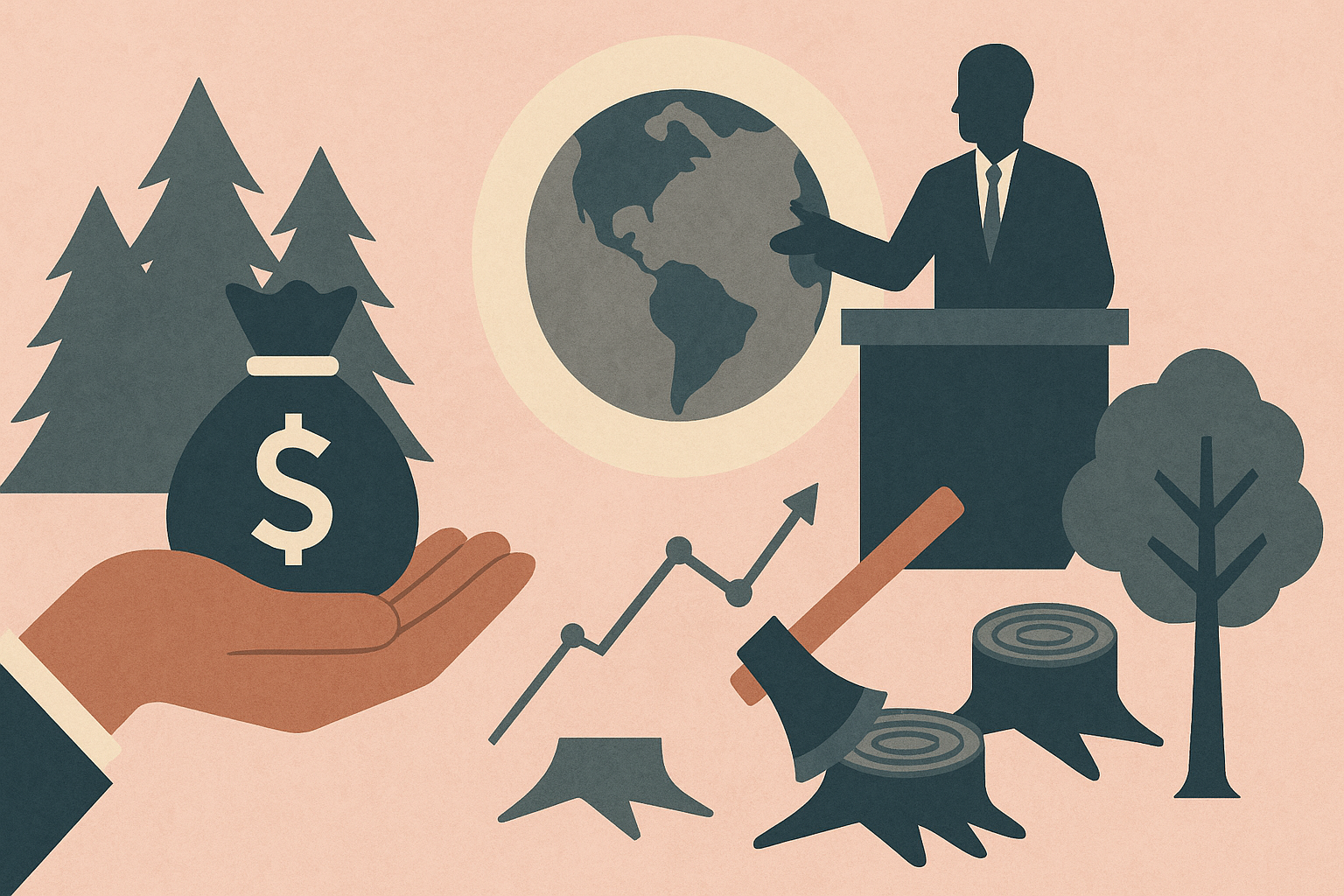
Climate Week NYC 2025 has concluded, leaving a significant impact on the global discourse around forest finance. This year’s event was marked by groundbreaking announcements, pledges, and initiatives that brought together leaders from various sectors, including heads of state, CEOs, philanthropists, investors, and Indigenous leaders. The discussions ranged from clean energy to biodiversity conservation, but two standout forestry-related commitments highlighted a transformative shift in climate ambition into actionable financial strategies. These initiatives not only promise to mobilize substantial funding for forest preservation but also emphasize the essential role of Indigenous Peoples and Local Communities in these efforts. As the world gears up for COP30 in Belém, these developments signal a critical moment in addressing the challenges of deforestation and climate change.
Brazil’s Bold Commitment: $1 Billion for Tropical Forests
In a notable announcement during Climate Week NYC 2025, Brazilian President Luiz Inácio Lula da Silva pledged $1 billion to the Tropical Forests Forever Facility (TFFF). This multilateral fund aims to financially support countries committed to preserving their tropical forests. Brazil’s contribution marks an essential first step toward establishing this innovative funding mechanism that combines public and private investments.
The Significance of Brazil’s Pledge
This commitment is seen as a powerful call to action for other forest-rich nations and donor countries ahead of COP30. According to John Verdieck from The Nature Conservancy, Brazil has the potential to lead breakthroughs at the upcoming conference. The TFFF’s design includes a commitment to allocate at least 20% of its resources directly to Indigenous Peoples and Local Communities (IPLCs), setting a precedent for future environmental funds.
Mauricio Bianco from Conservation International–Brazil emphasized that traditional forest conservation efforts have often struggled due to inadequate financial resources. The TFFF aims to change this by creating a self-sustaining financial structure that encourages investment while ensuring accountability through performance-based financing models.
A New Financial Architecture for Conservation
The TFFF is structured as a blended finance facility where contributions are pooled into an investment fund managed professionally. Returns generated from this fund will be used for long-term payments based on the area of intact forests maintained by participating countries. This model promotes sustainable practices by adjusting payments downward if deforestation or degradation occurs.
This approach contrasts with conventional grant mechanisms that rely on repeated donations; instead, it establishes an enduring financial architecture dedicated to conservation efforts.
A Roadmap for Closing the Forest Finance Gap
At Climate Week NYC 2025, another pivotal moment came when a coalition of 34 governments unveiled the Forest Finance Roadmap for Action. Developed by the Forest and Climate Leaders’ Partnership (FCLP) alongside Brazil’s government and supported by the UN Environment Programme, this roadmap outlines strategies aimed at closing an estimated annual $66.8 billion gap in forest finance.
Key Strategies Outlined in the Roadmap
The roadmap identifies six priority areas crucial for unlocking both public and private capital:
- Establishing innovative financial mechanisms like the Tropical Forests Forever Facility
- Scaling demand for high-integrity jurisdictional forest carbon credits
- Accelerating investment in sustainable bioeconomy practices
- Redirecting supply chain financing towards deforestation-free outcomes
- Aligning fiscal policy with objectives related to forest protection
- Utilizing sovereign debt instruments that reward long-term stewardship of forests
This initiative marks a significant shift as it aligns donor nations with forest-rich countries under a shared framework aimed at mobilizing substantial investments necessary for effective climate action.
The Urgency of Implementation
During its launch event at Climate Week NYC 2025, Frances Seymour emphasized transitioning from commitments made during discussions toward actual implementation on ground levels is critical now more than ever. She pointed out that practical models are already being tested across regions demonstrating potential successful strategies that can unlock significant funding streams.
The Path Forward: Building Momentum Towards COP30
The momentum generated during Climate Week NYC 2025 sets an optimistic tone as participants look forward to COP30 in Belém. With over 1,000 events throughout New York City focused on climate action discussions, Helen Clarkson from The Climate Group noted how these dialogues indicate maturity within climate conversations—shifting toward operational solutions rather than mere talk about intentions.
Creating Collaborative Opportunities
This collaborative environment fosters connections among diverse stakeholders—companies collaborating with activists or investors making deals with policymakers—creating pathways towards translating ambitious targets into tangible actions on-site globally.
A Global Movement Beyond NYC
The influence of Climate Week extends beyond New York City through similar initiatives popping up globally—from Washington D.C., Nairobi—to many other urban centers advocating local actions aligned with worldwide goals against climate change challenges.
Towards Effective Implementation Post-Climate Week NYC 2025
As we move closer towards COP30 next year amidst growing urgency surrounding our planet’s health issues—the challenge lies not merely within frameworks established but effectively converting those frameworks into funding avenues capable enough enabling real-world changes leading us away from destructive patterns faced today across ecosystems worldwide including our invaluable forests!